World building in tabletop RPGs isn’t a solo act by a Game Master (GM) – it’s a collaborative, interactive experience between GMs and players. Every session at the table is a conversation that breathes life into a fictional world. The world emerges when players ask questions, inhabit their characters, and make choices. In a sense, the game world comes to exist through the experience of the participants, with the collective imagined experience shared among all participants. This idea can be illuminated by phenomenology – a branch of philosophy focused on studying experience. world building from the perspective of tabletop role-playing games (TTRPGs) is fundamentally about feelint as much as it is about thinking, and phenomenology will guide us to understanding this point.
In phenomenology, experience is everything. What is it like to experience something? How does our experience inform meaning? When we apply this to RPGs, we might ask: what is it like to experience a fantasy world? How does the world of a game “exist” for the players and GM? It turns out that RPG world building is a phenomenological process. The world only truly takes shape through the lived experiences and interactions of everyone around the table, within the theater of the mind that we all engage in.Don’t worry about sounding professional. Sound like you. There are over 1.5 billion websites out there, but your story is what’s going to separate this one from the rest. If you read the words back and don’t hear your own voice in your head, that’s a good sign you still have more work to do.
Phenomenology 101 – “To the Things Themselves!”
To ground our discussion, let’s touch briefly on phenomenology’s basics. Edmund Husserl, the founder of phenomenology, urged philosophers to go “back to the things themselves,” meaning we should examine experience as it is lived, before any theories or assumptions. His pupil Martin Heidegger expanded this idea, emphasizing that to do phenomenology is “to let that which shows itself be seen from itself in the very way in which it shows itself” (Heidegger 34). In plainer terms, we must let phenomena (like a game world) reveal themselves as they are experienced, rather than forcing preconceived notions on them.
“Thus 'phenomenology' means [...] to let that which shows itself be seen from itself in the very way in which it shows itself from itself. But here we are expressing nothing else than the maxim formulated above: ‘To the things themselves!” - Martin Heidegger
In an RPG context, the “things themselves” are the elements of the world that come up as the game is played: objects, events, characters, etc. The tavern isn’t just a paragraph in a module or a doodle on a map – it’s also the warm, cozy, or threatening feelings the players get when their characters enter it, the mental image they form at the table, and the significance it takes during play. Phenomenology directs us to consider the world as it is experienced, which is exactly what matters in a TTRPG. No matter how rich your written lore, the only real game world is the one that the group actually experiences together in play.
Being-in-the-Game-World (Together)
Heidegger introduced the concept of Dasein to explain how human beings exist within the world. Da, meaning place, and Sein, meaning time, indicates quite literally a being within space and time. Individuals are never isolated from their contextual place in the world. To remove either is to destroy the context and to isolate someone from their own meaning. In RPGs, players and their characters are similarly in the game world. They don’t observe the world as distant outsiders, they participate through roleplay, they are their characters moving within that world. By extension, in a TTRPG the world is literally a shared space – my character’s world is also your character’s world. We build and explore it together.
The game world is what Edmund Husserl would call a lifeworld: the world of lived experience that we take for granted in daily life. In our case, it’s a fictional world we feel at home in during play, with its own places, objects and social meanings. Objective truths rely on an interconnected group of subjects experiencing and agreeing on them. To Husserl, “transcendental intersubjectivity is the absolute and only self-sufficient ontological foundation… out of which everything objective […] draws its sense and its validity.” Put simply, a game world’s “reality” gets its meaning from the shared consciousness of the group. The collective imagination is established and given weight by the collective agreement and imagination of GM and players. The rulebooks and notes might define a world in theory, but it only becomes real through this active, communal experience.
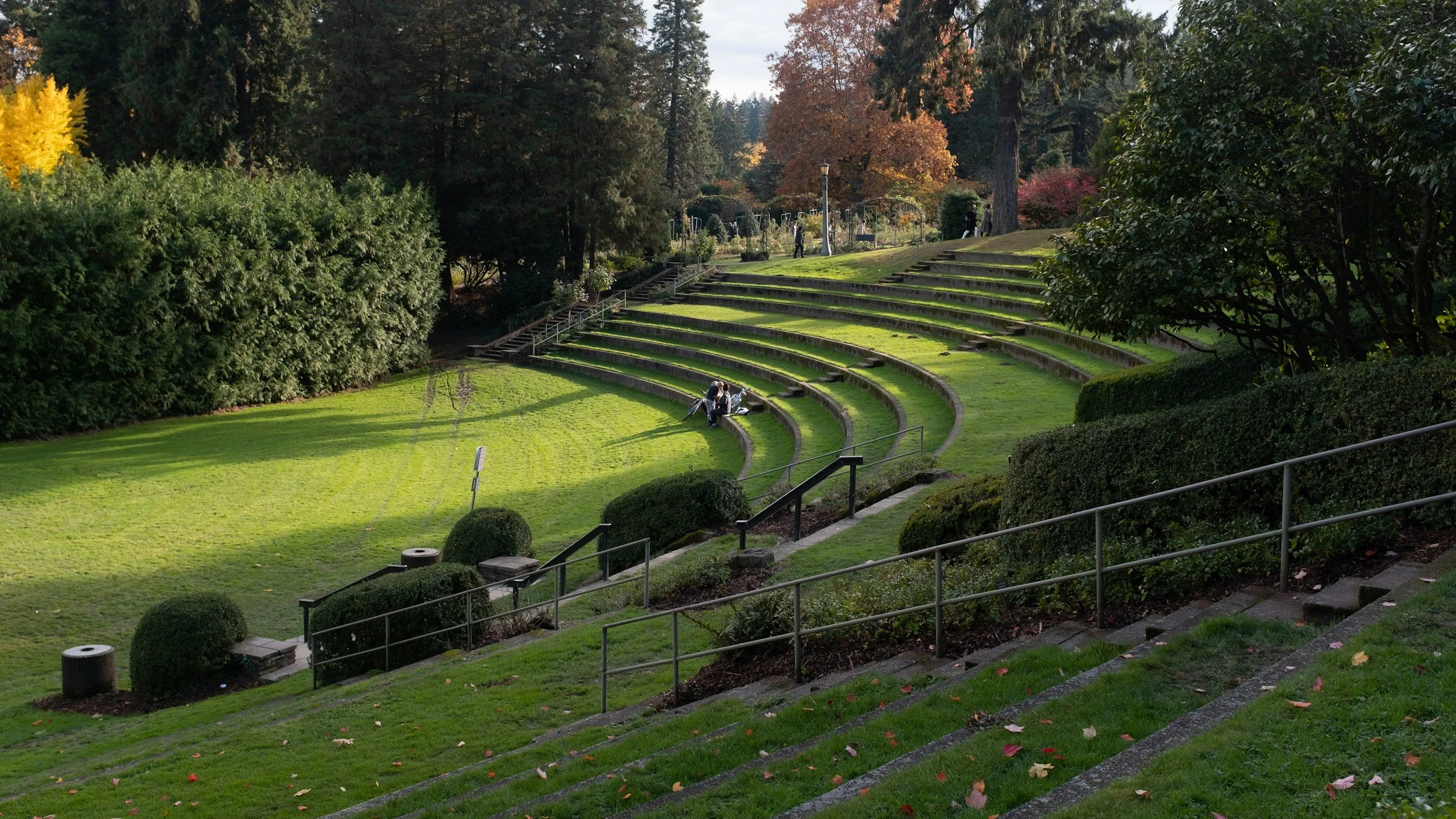
For our practices I'd like to call this shared, imaginary space the theater of the mind. Rather than being dedicated to a single role, each participant is both actor and director, though the GM will fill the rest of the stage with props that guide the group through the story. Going back to the tavern example, each player fills the role of the leading cast looking for food and drink, while the GM fills out the space with extras, side characters, and renders the scene. Everything is guided by collaborative means, the GM creating opportunities for the players to move the scene along its natural path. The players are connected directly in their experiences within the game world, and the lifeworld is created during play. Everyone adjusts their mental images of the tavern to include different characters and the things within it. The world emerges from the back-and-forth between players and GM within the confines of the theater in which we are engaged.
Co-Creating the World: Game Master and Player Interactivity
Unlike the static world of a novel, an RPG world is fluid, shaped by interaction. The GM might set the stage, but the players’ actions and ideas continually transform it. In a very real sense, the players are building the world as they play. Embracing this as a GM can lead to a richer, more dynamic world. The difference between immersion and lack thereof is often the question of player agency. To that end, improv theater has the famous “Yes, and…” principle, and many GMs find that a similar ethos works wonders in RPGs. The Mystic Arts YouTube channel has a great breakdown of utilizing “Yes, and” in world building: instead of rigidly sticking to your script, incorporate players’ ideas to collaboratively build the setting. If a player asks, “Is there a blacksmith in this town who might repair my sword?,” a traditional top-down approach might have the GM flip through prepared notes to see if such an NPC exists. But an interactive approach might be to answer: “Yes, and in fact, you know this blacksmith – tell me about them.” In that moment, a piece of the world (an NPC with some relationship to a character) gets created collaboratively. The player provides a concept (“Old Javier, a one-armed smith who knew my father”), and the GM weaves it into the fabric of the world. Both share ownership of that new element.
Worlds built this way tend to feel alive and player-centric. It’s a shared story the group is driving together. This approach echoes what YouTube creator Pointy Hat calls a “gameplay-first” philosophy of world building – essentially, start from what the players find engaging in practice, and build outward from there. A city can be more than an info-dump of lore; it can be designed like a theme park of adventures catering to the party’s interests. Pointy Hat’s city-building guide suggests picking a strong theme and then filling the city with attractions – interesting activities or encounters – that match that theme and align with what the players enjoy. Do your players love intense combat? Then the city might secretly host gladiatorial pit fights. The key is that the world responds to the players. Interactivity means the players aren’t just experiencing the world; they are helping create it through their actions and preferences.
These are all ideas to get the ball rolling and help the theater of the mind flow more naturally. Collaborating together to build out the world is dramatically easier when the set pieces are flexible, but this only works when the narrative allows for it. In the cases of specific story styles that include twists, these elements won't work because the pieces that make them work have to fit together in specific ways. Remember, if the set pieces break entirely it grinds everything to a screeching halt. Heidegger points this out explicitly: “But when an assignment has been disturbed – when something is unusable for some purpose – then the assignment becomes explicit.” (H75) When something stops working is when we become most aware of what it should be doing, but isn’t.
Mechanics: Feeling vs Function, do they fit in?
World building doesn’t stop at lore and description – it also extends into game mechanics and systems, which shape how the world feels and functions for the players. A well-designed mechanic can reinforce the atmosphere of the world (the feeling), while a well-tuned rule ensures smooth play (the function). Striking the right balance between these can greatly enhance the interactive experience.
Most discussions of mechanics focus greatly on game flow and how well it keeps the game moving. Within the theater of the mind, different elements can grind the flow of the game to a screeching halt when they have to be explored. In some TTRPG systems this is more frequent depending on the mechanical complexity and can be considered part of the core experience. If that's fine with you, power to you (looking at you Pathfinder players!). For the rest of us though, these tend to be at least somewhat disruptive. I've sat in many a session where a specific rule ground things to a screeching halt because the specific mechanic was not understood, or had to be researched to determine the consequence. Fine tuning mechanics so they fit into the theme and setting of your world will build both authenticity and immersion.
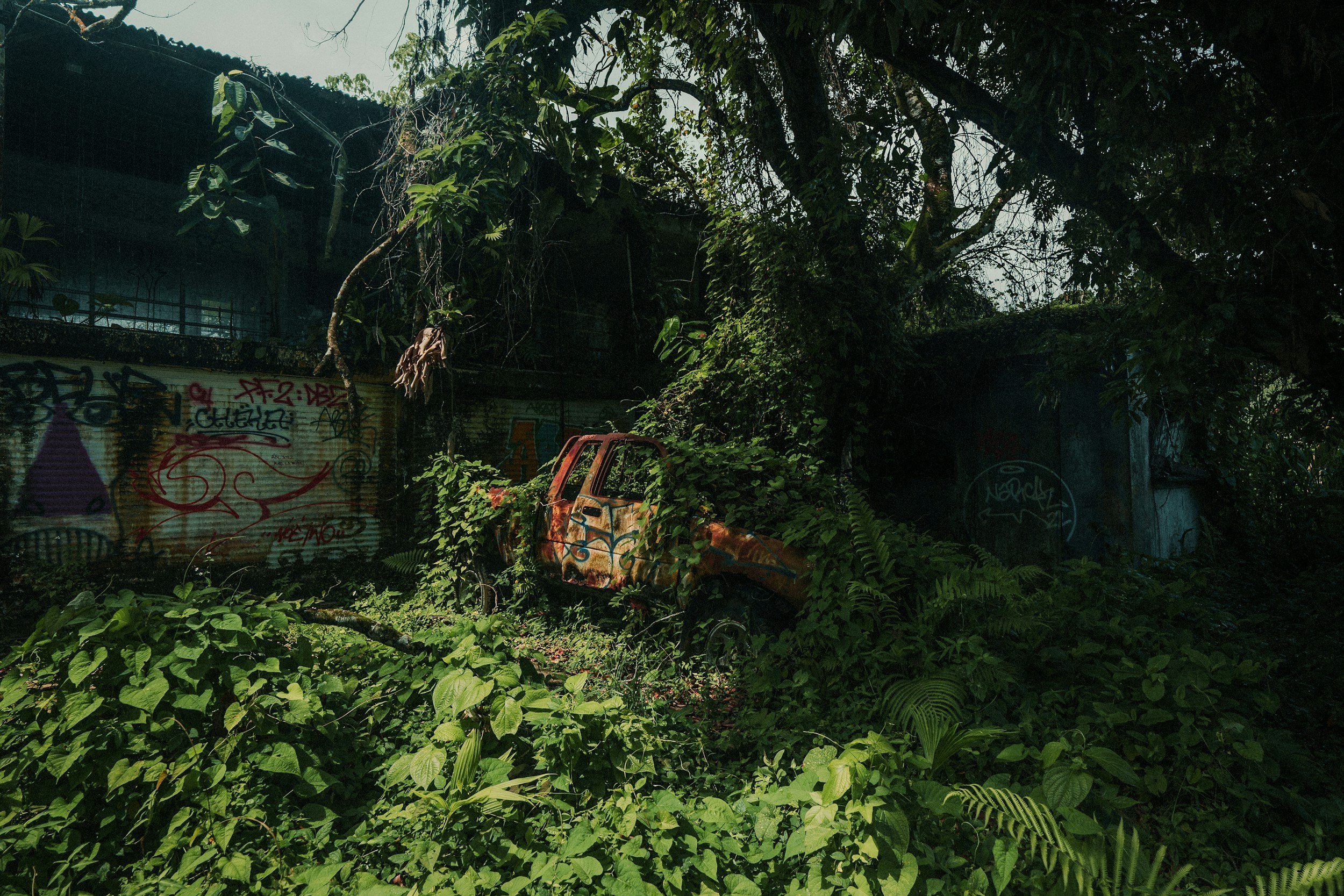
Depending on your setting, some things might make more sense than others. The alignment system might be a terrible idea in a post-apocalyptic world as individuals will do whatever it takes to survive, where actions are forced to happen based on external consequences. Alternatively, in a noir setting it might make more sense to lean heavily into the alignment system as different moral choices become magnified during exploration or plot development.
Mechanics are a core part of the theater of the mind. Whether it’s how magic works, how travel is handled, or how character progression is gated, these rules influence how everyone experience the story. A world where teleportation is easy feels very different from one where weeks-long journeys through dangerous wilderness are the norm. The tailoring of game rules to the themes a GM is trying to convey is critical. If something isn't working mechanically it's because it needs more fine tuning, which is an opportunity for the table. While it's not always convenient for solutions in the moment, pre-game or post-game discussions about these rules and how they feel is an area that deserves much more discussion/consideration than it gets. If something isn't working it will not only be known but it will reveal itself explicitly. The flow within the theater will slow down, or even grind to a halt.
The World as Lived by Players
When we approach world building as a theater of the mind, the game transforms into a lived story. Phenomenology reminds us that a world is not merely a set of facts, but a context of meaning experienced by conscious beings. In a TTRPG, that means the true measure of world building is how it is experienced by your group. A meticulously crafted city that the players find boring isn’t truly “alive” to them; a simple, roughly thrown together outpost that becomes the site of memorable player adventures is far more real to them. The world lives through play.

The role of a GM is a bit like being the the director: you create and present the phenomena (the sights, sounds, NPCs, conflicts), create scenarios for your players to interact with your set pieces, and adjust as needed to align with direction the game is taking. The players, through their choices and imaginations, disclose possibilities for change and direct the narrative of play. They venture into the dark forest and thereby bring that part of the world into focus; they ignore the temple, so it remains just a blip on the map for now, unexplored. The meaning of the world unfolds along with their journey.
The theater of the mind is a feedback loop of creation and experience. Embracing this mindset can relieve some pressure from GMs in creating immediate set pieces and tools you can pick up when they become relevant. It can also lead to deeper engagement, as everyone around the table feels a sense of ownership and curiosity toward the world. As you build your next campaign, remember that the world exists in the interaction. Encourage player input, remain flexible, and focus on the theater, the lived experience you create together. In doing so, you’ll create a world that isn’t just described to your players but with your players – a world that feels real to your gaming group. Ultimately, that shared reality, full of personal meaning and collective memories, is the most rewarding world of all.
Sources
Heidegger, Martin. Being and Time. Translated by John Macquarrie and Edward Robinson, Harper & Row, 1962. Originally published 1927.
“Husserl.” Stanford Encyclopedia of Philosophy, edited by Edward N. Zalta, Stanford University, 2020, https://plato.stanford.edu/entries/husserl/.
“Heidegger.” Stanford Encyclopedia of Philosophy, edited by Edward N. Zalta, Stanford University, 2020, https://plato.stanford.edu/entries/heidegger/.
Zahavi, Dan. Phenomenology: The Basics. Routledge, 2019.
Pointy Hat. “City Building Guide for DMs.” YouTube, 19 Mar. 2022, https://www.youtube.com/watch?v=fx9M_A0dDrQ.
Pointy Hat. “D&D Alignment Is Garbage (and How to Fix It).” YouTube, 18 Apr. 2020, https://www.youtube.com/watch?v=-K28kDqw0XQ.
Mystic Arts. “18 Tricks to Speed Up DnD Combat.” YouTube, 10 Nov. 2022, https://www.youtube.com/watch?v=5z9ANJJep_0.
Mystic Arts. “How to Use Player Collaboration to Build Better Worlds.” YouTube, 25 May 2023, https://www.youtube.com/watch?v=nTrc4Vws5jY.
OpenAI. ChatGPT. “Come up with four topics that can be written about covering ttrpgs with phenomenology.” 16 October, 2025.
